Best Type of Anode Rod for Residential Water Heaters
What Is an Anode Rod?
An anode rod is a metal rod inserted into your water heater tank to prevent rust and corrosion. Traditional anode rods are typically made from aluminum or magnesium, while powered anode rods use electricity to achieve the same goal without degrading.
What is the Best Type of Anode Rod for a Residential Water Heater?
The best type of anode rod is a powered anode rod for homeowners prioritizing efficiency and durability. While aluminum and magnesium rods are budget-friendly, they require frequent replacement and are less effective in certain water conditions. Anode rods are essential for maintaining your water heater and preventing tank corrosion.
Though more expensive upfront, powered anode rods offer maintenance-free, long-term protection and are the ideal choice for all water types, especially in well or soft water systems.
Understanding the differences between aluminum, magnesium, and powered anode rods, including their pros and cons and which is best for various residential water heaters, will help you make the right choice.
Types of Anode Rods
- Powered Anode Rods: Maintenance-free and suitable for all water types, using electricity to prevent corrosion.
- Aluminum Anode Rods : Affordable and effective in hard water conditions.
- Magnesium Anode Rods : More reactive and effective at preventing corrosion, but deplete faster in hard water.
But Corro-Protec Is More Expensive…” Not Really
According to our internal data, the annual power consumption of a Corro-Protec anode costs around $2 to $3 per year to operate, essentially negligible compared to the $30 to $45 per year saved by reducing scale buildup.

Pros and Cons of Each Anode Rod Type
POWERED ANODE RODS
[+] Pros:
- Long-lasting and maintenance-free, up to 20 years.
- Effective in all water types, including hard and well water.
- Eliminates odors caused by sulfur-reducing bacteria.
- Saves money and energy long-term.
[–] Cons:
- Higher upfront cost
- Requires a power source nearby.
ALUMINIUM ANODE RODS
[+] Pros:
- Cost-Effective.
- Works well in hard water.
[–] Cons:
- Less effective at protecting against corrosion compared to magnesium and powered anode rods.
- May contribute to sediment buildup over time.
- Minimal lifespan, usually 3 to 5 years.
MAGNESIUM ANODE RODS
[+] Pros:
- Cost-effective corrosion prevention, not as good as a powered anode rod.
- Ideal for soft or moderate water conditions.
[–] Cons:
- Depletes quickly in hard water.
- Minimal lifespan, usually 3 to 5 years
- Contributes to rotten egg smell in your water from sulfide gas.
Best Anode Rod for Each Residential Water Heater Type
Gas Water Heaters
Gas water heaters generate heat at the bottom of the tank, which can accelerate anode rod depletion. For these systems :
- Opt for powered anode rods for better corrosion protection and removal of sulfur smell in your water.
- Use magnesium anode rods for temporary protection or if you plan to change your water heater soon.
Electric Water Heaters
Electric water heaters have heating elements inside the tank, which can create hotspots and increase sediment buildup. For these systems :
- Choose powered anode rods for long-term, maintenance-free protection against corrosion and sediment buildup.
- Use aluminum anode rods for cost-effective protection.
Hybrid Water Heaters
Hybrid water heaters combine heat pump technology with a tank system. The water chemistry in these systems can vary :
- powered anode rods should be considered for their adaptability and longevity
- consider magnesium anode rods for soft water areas
Tankless Water Heaters
Tankless water heaters does not use anode rods, as they don’t have a storage tank to protect. However, if your tankless system includes a small storage tank, a powered anode rod is the best choice due to its low maintenance and superior performance.
Well Water Systems
Well water is often high in minerals and bacteria. For water heaters using well water:
- Use powered anode rods to prevent sulfur smells and corrosion.
- Avoid magnesium rods, as they may exacerbate odor issues.
Soft Water Systems
Softened water can accelerate the degradation of traditional anode rods. For homes with soft water:
- Use powered anode rods to eliminate corrosion without frequent replacement.
- Avoid aluminum rods, which may degrade faster in soft water conditions.
How to Choose the Right Anode Rod
Consider these factors when selecting an anode rod for your water heater :
- Water Chemistry : Hard, soft, or smelly water affects the choice of anode rod.
- Water Heater Type : Different water heater designs benefit from specific rod types.
- Maintenance Preferences : Choose powered anode rods for minimal upkeep.
- Budget : Aluminum rods are the most affordable, while powered rods offer long-term savings.
Installation Tips for Anode Rods
Replacing or installing an anode rod is straightforward. Follow these steps :
1. Turn Off Power and Water : Shut off the electricity or gas and close the water supply valve.
2. Drain the Tank : Connect a hose to the drain valve and empty the tank.
3. Remove the Old Anode Rod : Use a socket wrench to unscrew the existing rod.
4. Install the New Anode Rod : Insert the rod and tighten it securely.
5. Refill the Tank : Open the water supply valve and let the tank fill.
6. Restore Power : Turn the electricity or gas back on.
If you’re not comfortable with DIY installation, hire a professional plumber.
FAQ
A traditional magnesium anode rod protects your tank by sacrificing itself over time. Once it’s depleted, the tank loses that protection so it must be inspected regularly and replaced when needed. Most water heater manufacturers recommend inspecting sacrificial anodes every 1 to 3 years (and sooner in hard water or softened water conditions). In some aggressive water conditions, a magnesium rod can be consumed much faster.
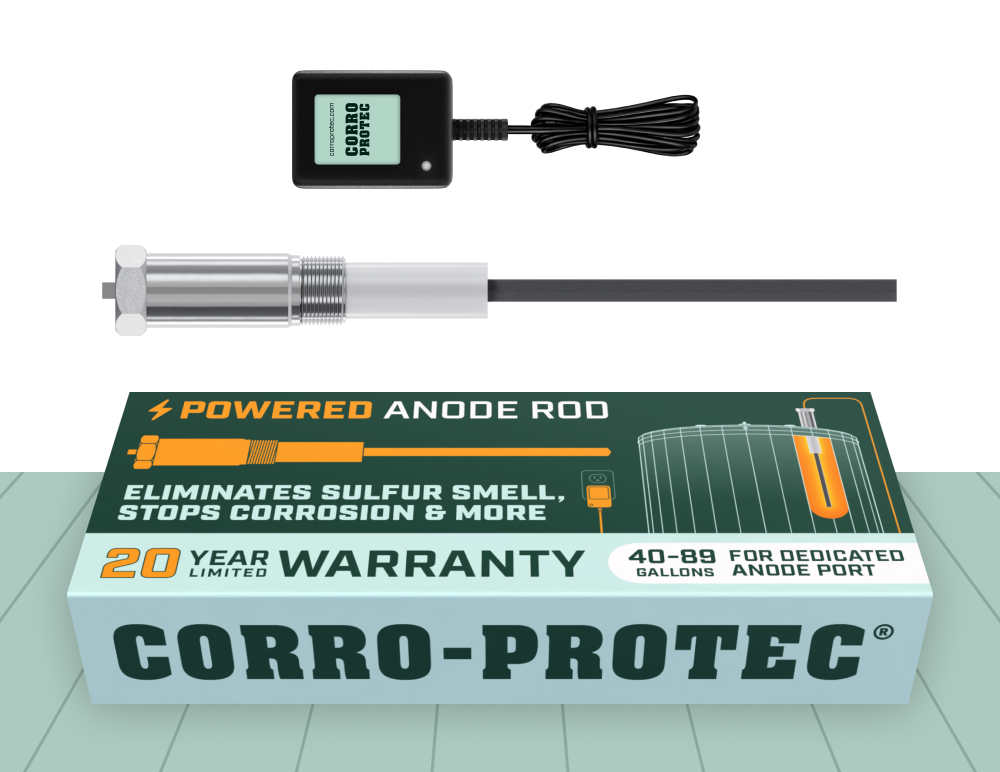
A Corro-Protec powered anode rod protects the tank using a small electrical current and a non-sacrificial titanium rod, so it doesn’t deplete like magnesium. That’s why, in normal use, it can provide long-term protection for many years without routine rod replacement.
Powered anode rods are recognized for their longevity, effectively protecting your water heater from corrosion for many years. Unlike sacrificial anodes which deteriorate over time, powered anodes can potentially outlast the lifespan of your water heater.
This lifespan often extends over a decade, with some high-quality brands like Corro-Protec offering powered anode rod designed to last more than 20 years. However, the precise lifespan can vary based on factors like water quality and usage patterns. Regardless, the long-lasting nature of powered anode rods contributes to their appeal, as they require less frequent checks and replacements compared to traditional sacrificial anodes.
A powered anode rod is often the best choice for well water because it provides long-term corrosion protection and can help eliminate sulfur (“rotten egg”) odor that sometimes shows up in hot water on well systems. Traditional magnesium anode rods can contribute to odor issues in certain conditions, so a powered anode is frequently the better option when smell is a concern.
A powered anode rod is one of the best options for smelly hot water linked to sulfur/hydrogen sulfide (“rotten egg” smell). Instead of dissolving like traditional rods, it uses a small electrical current and a non-sacrificial rod to reduce the reaction inside the tank that leads to hydrogen sulfide odor, helping restore clean-smelling hot water while protecting the tank from corrosion.
Note: If the odor is only in your hot water (not cold), the water heater is usually the source.
Blog
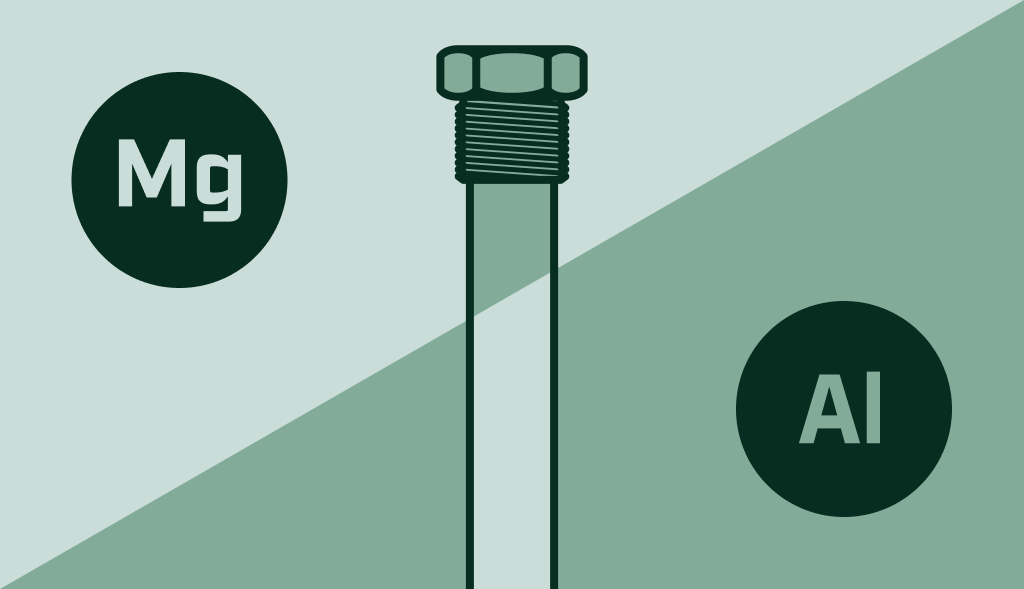
Aluminum vs Magnesium Anode Rods: Understanding the Differences
Water heaters are essential in most households, providing hot water for various daily needs. A crucial component of water heaters is the anode rod, vital […]

Water Heater Anode Rod – Extending Your Water Heater Life!
When you think about household maintenance, checking and replacing a water heater anode rod might not be the first thing that comes to mind. However, […]