GE Water Heaters: Maintenance and Anode Rod Replacement
Summary
- GE water heaters are known for reliability, but still require proper internal protection.
- The importance of the anode rod type inside your tank.
- Replacing a depleted anode rod can stop odors, leaks, and corrosion.
- Powered anode rods from Corro-Protec are a permanent, maintenance-free upgrade for all GE models.
Learn where to find the anode rod, when to replace it, and how to protect your GE hot water heater in the long term.
Understanding Your GE Hot Water Heater
GE (General Electric) water heaters are built for consistent performance, whether electric or gas. Like most storage-tank heaters, they rely on a glass-lined steel tank to hold hot water. Over time, water, minerals, and heat cause wear on that protective layer.
To slow this process, GE includes an anode rod, a metal component designed to attract corrosive minerals away from the tank lining. As it breaks down, the rod sacrifices itself to protect the tank. When it becomes depleted, corrosion can begin inside the tank, shortening its lifespan.
GE Water Heater Maintenance Tips
Routine maintenance helps ensure your GE water heater runs efficiently for years. Here’s what to do annually or every six months if you have hard water:
- Drain a few gallons from the tank to remove sediment.
- Inspect the anode rod for corrosion, scaling, or thinning.
- Check for leaks at fittings, valves, and seams.
- Test the pressure relief valve to confirm it’s functioning properly.
- Flush the entire tank if the buildup is excessive.
These simple steps can significantly improve efficiency and extend lifespan. For more details, visit How a Water Heater Anode Rod Works and What Is an Anode Rod?.
Locating the Anode Rod on a GE Water Heater
The anode rod on most GE water heaters is located on the top of the tank, under a hex-shaped fitting or cap. In some smaller or compact models, the anode rod may be connected to the hot-water outlet port.
If you’re unsure where to look, this guide can help: Where Is the Anode Rod on a Water Heater?
Signs It’s Time to Replace the Anode Rod
- Hot water smells like sulfur or rotten eggs.
- Water from hot taps appears rusty or cloudy.
- The tank makes popping or rumbling sounds.
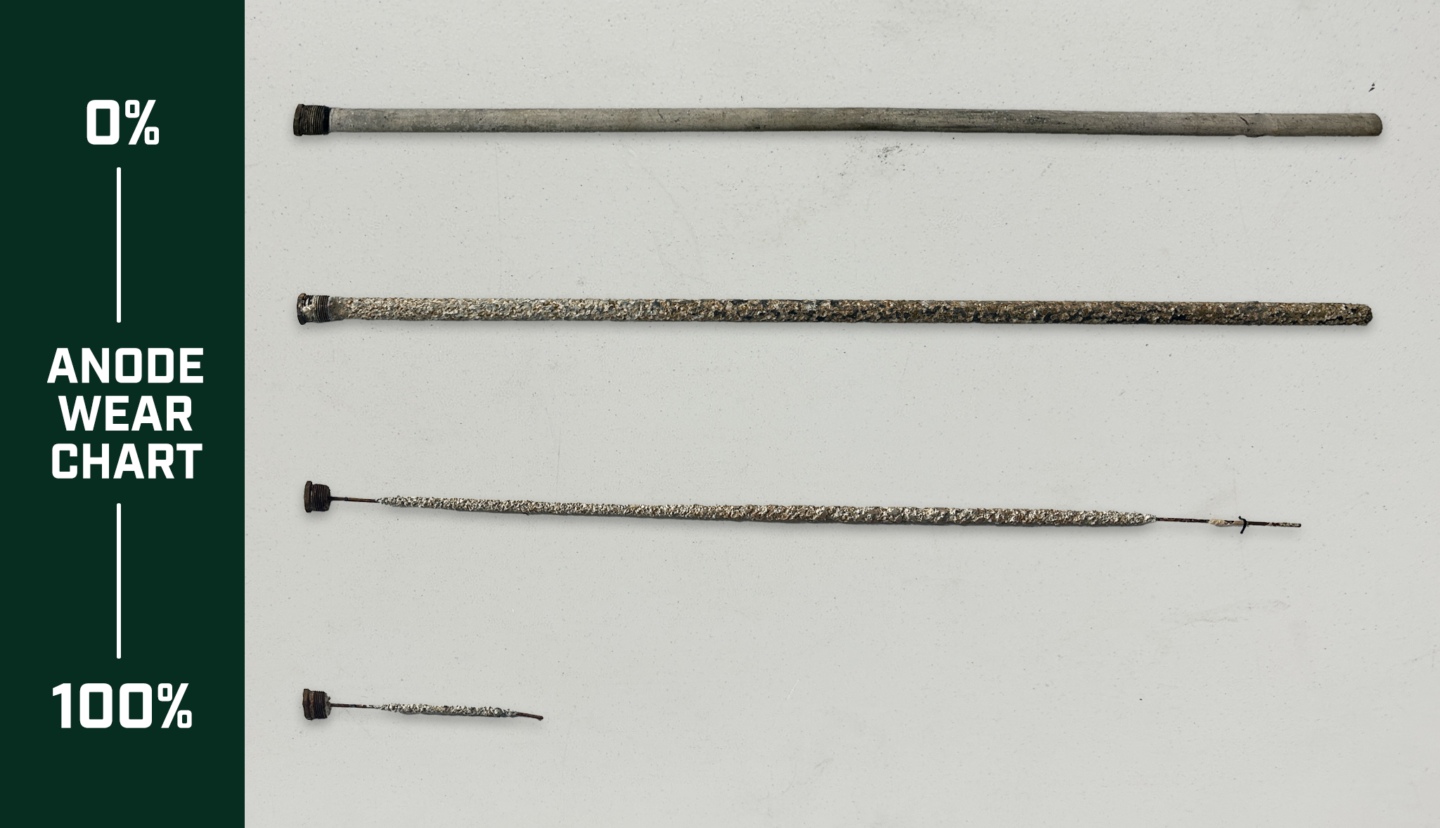
- The anode rod is 50% depleted or more
Replacing your anode rod before corrosion spreads is one of the simplest ways to extend the life of your GE hot water heater.
50% Depleted Anode Rod
If your anode rod is 50% depleted or more, it’s no longer doing its job of protecting your water heater. You can refer to the following image as reference when you inspect your sacrificial anode rod.
Why Powered Anode Rods Are the Best Choice for GE Water Heaters
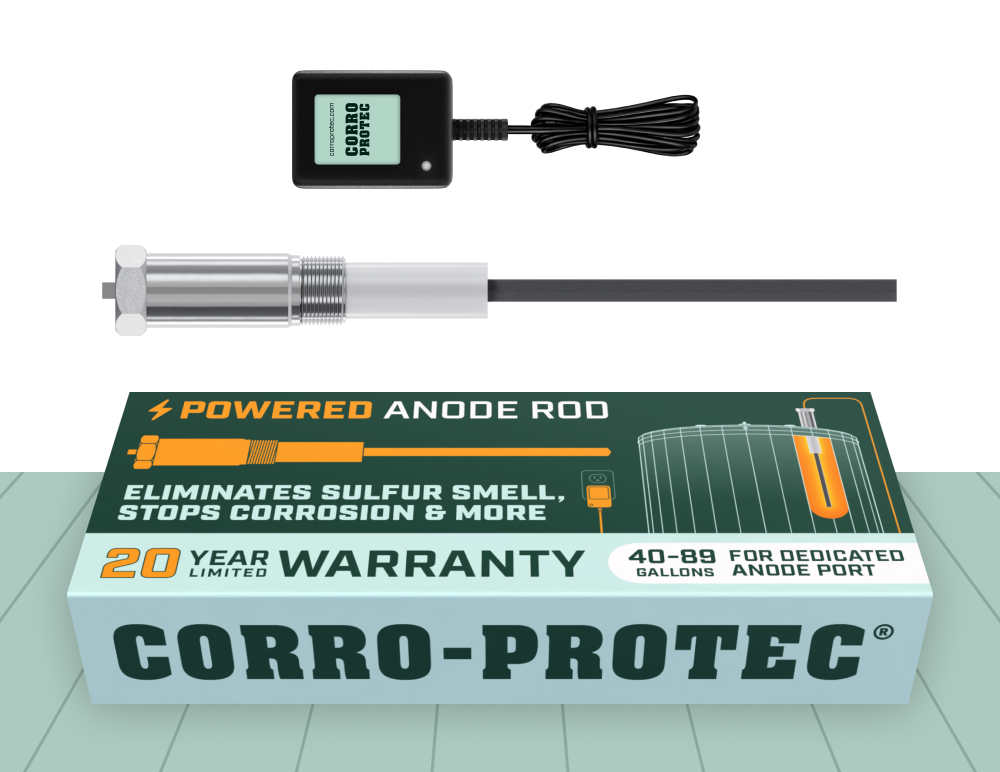
The Corro-Protec Water Heater Anode Rod is a powered solution that provides consistent corrosion protection without wearing out. Instead of sacrificing metal, it uses a small electrical current to prevent oxidation inside the tank.
Key advantages:
- Stops internal rust and mineral buildup.
- Eliminates sulfur odors in hot water.
- Works with all GE gas and electric models.
- Maintenance-free once installed.
Backed by a 20-year limited warranty.
Protecting the investment you’ve made in your GE water heater
By choosing a powered anode rod from Corro-Protec, you’re making a long-term investment in the health of your GE hot water heater. This solution provides consistent, maintenance-free protection, ensuring your heater’s performance, energy efficiency, and durability over time.
FAQ
Blog
Anode Rod Socket Size: Quick & Easy Guide
Anode rods are very important in all water heaters. They keep the water tank from rusting, so your heater can last longer. But, sacrificial anode […]
Best Type of Anode Rod for Residential Water Heaters
What Is an Anode Rod? An anode rod is a metal rod inserted into your water heater tank to prevent rust and corrosion. Traditional anode […]