Richmond Water Heater Maintenance & Anode Rod Replacement
Summary
- Richmond water heaters are known for reliability, but their tanks still need protection against corrosion.
- Durable, glass-lined steel design backed by Rheem.
- Offers electric, gas, hybrid, and tankless models.
- Replacing a worn anode rod prevents leaks, odors, and costly damage.
- Powered anode rods from Corro-Protec offer long-term corrosion protection without the maintenance issues of traditional rods.
Understanding Your Richmond Hot Water Heater
Richmond water heaters, part of the Rheem Manufacturing Company, are built to deliver dependable and efficient hot water for residential and commercial use across the United States.
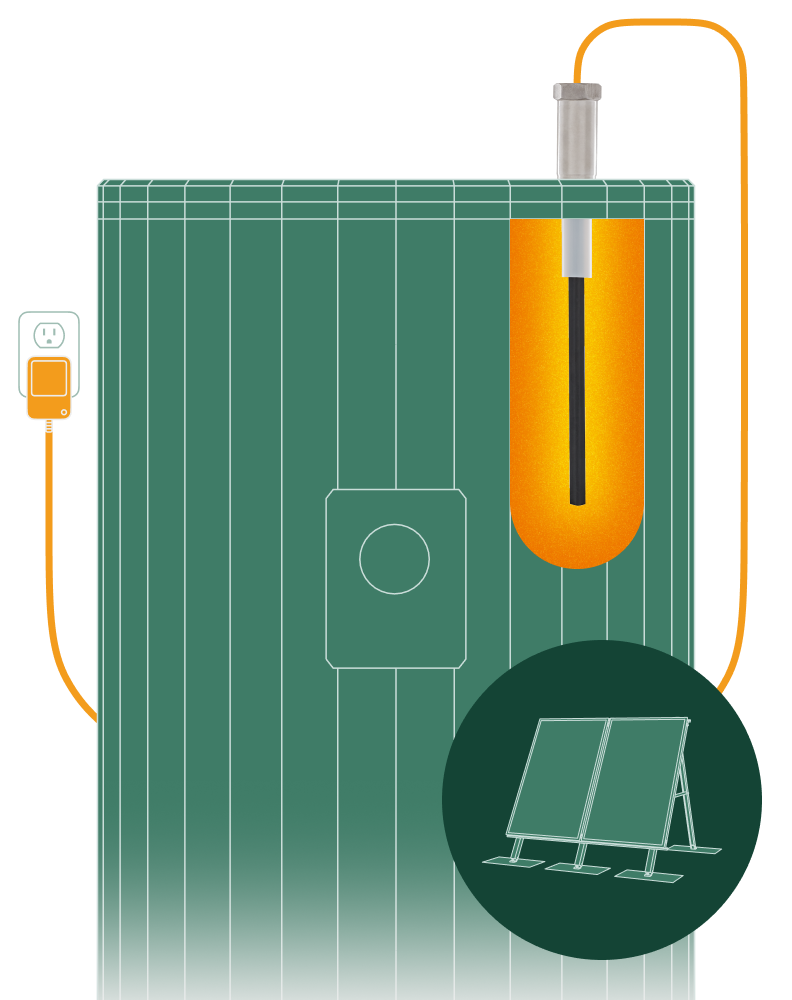
Richmond manufactures a wide selection of gas, electric, hybrid (heat pump), tankless, and solar water heaters, designed for long-term use in homes and small businesses.
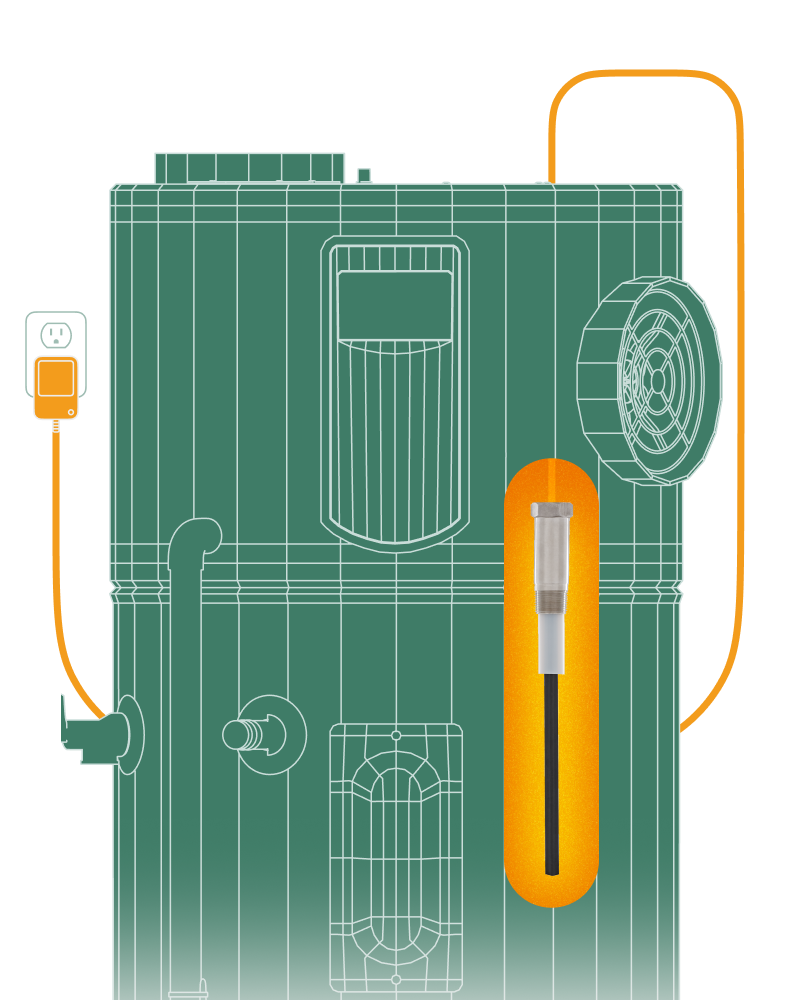
Materials and Design
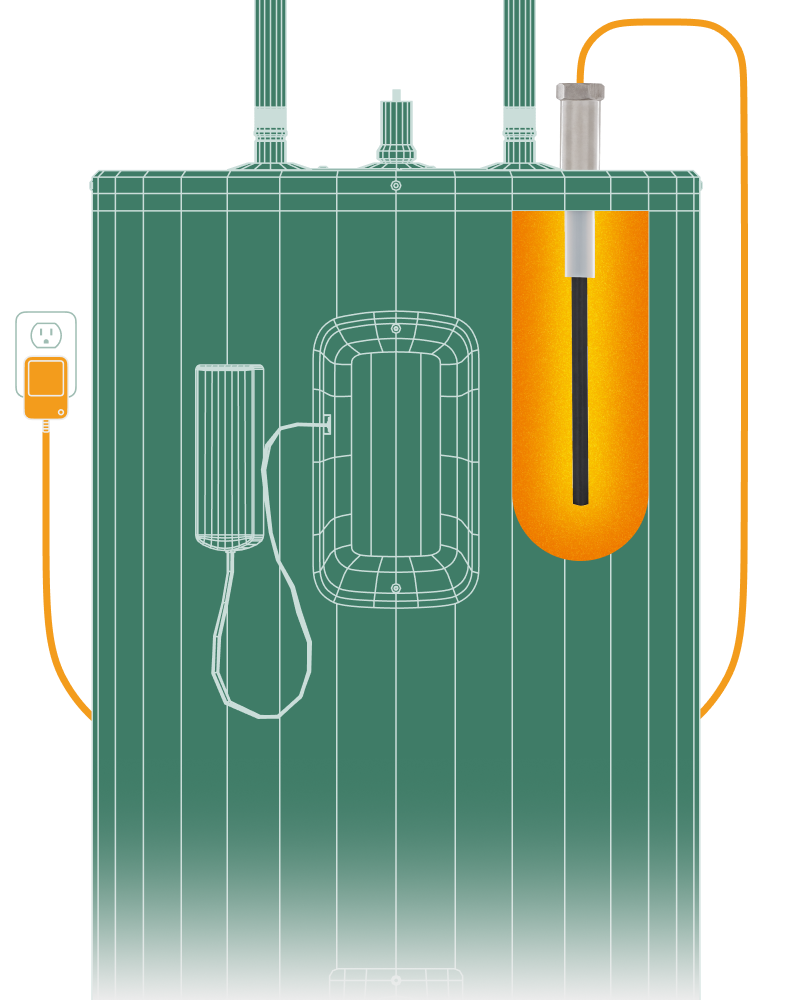
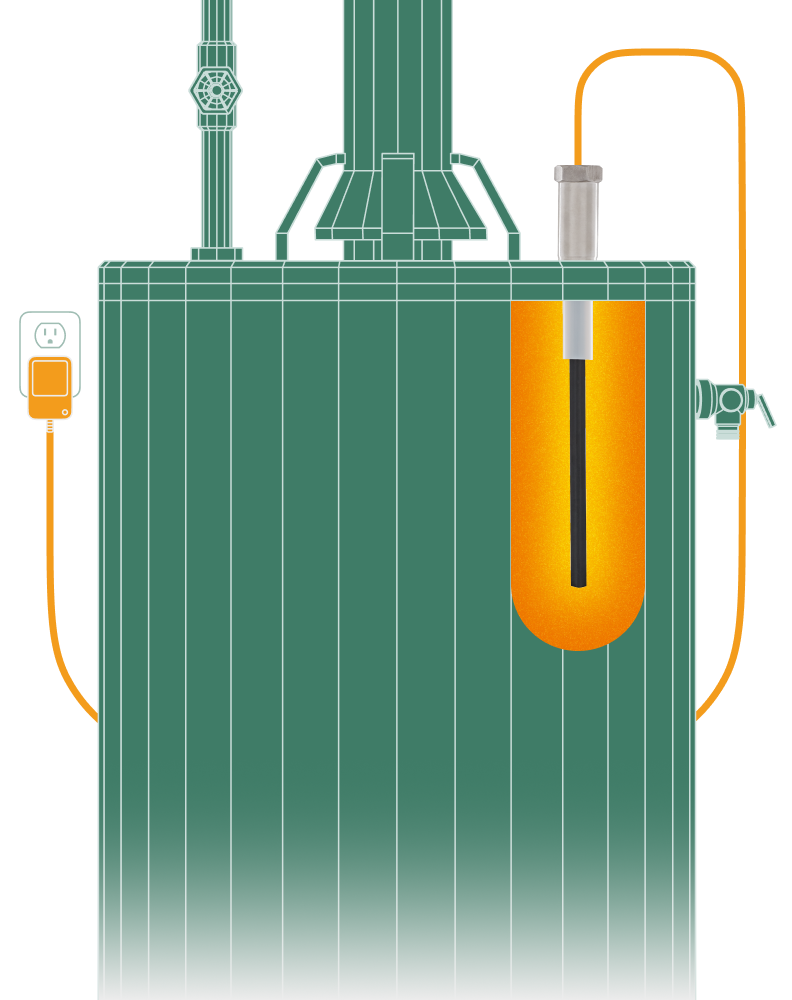
Richmond tank-type heaters are made with a steel exterior and a glass-lined inner tank to prevent corrosion. Foam insulation between the layers keeps water hot and minimizes heat loss. Inside, a dip tube directs incoming cold water to the bottom of the tank for heating.
The system includes a temperature and pressure (T&P) relief valve for safety and a sacrificial anode rod-usually magnesium or aluminum, that helps protect the tank from rust and mineral buildup (Richmond Owner’s Manual).
How They Work
Electric Richmond models heat water using internal elements controlled by a thermostat. Gas versions use a burner at the tank’s base to warm the water and vent gases safely outdoors. Hybrid models transfer heat from surrounding air into the tank, improving efficiency, and tankless units heat water instantly as it passes through a compact heat exchanger (ENERGY STAR).
Maintenance Tips
Regular maintenance helps extend a water heater’s life and efficiency:
- Flush the tank every 6-12 months to remove sediment buildup.
- Inspect and test the T&P relief valve annually to ensure safe pressure control.
- Check and replace the anode rod if it’s corroded or the core wire is exposed.
- Turn off power before servicing electric models, and clean burners regularly on gas units.

Critical role the anode rod plays
Most water heaters come with a factory-installed anode (usually magnesium or aluminum) designed to corrode first so the tank doesn’t.
Knowing when it’s worn out and how to find it, remove it, and replace it with an upgraded option like a powered anode rod, helps keep your system protected.
Finding the Anode Rod on a Richmond Water Heater

If you own a Richmond water heater, the anode rod is typically installed on the top of the tank, threaded directly into the metal body. It can appear as a small hex-shaped plug or a bolt-like fitting. In some models, it’s combined with the hot-water outlet connection.
Locating the rod can be easier with the help of this guide: Richmond Water Heater Anode Rod.
Common Signs Your Richmond Anode Rod Needs Replacement
- Hot water smells like rotten eggs (caused by sulfur-producing bacteria).
- Water looks rusty or discolored.
- The tank makes popping or crackling sounds from mineral buildup.
- You haven’t replaced your sacrificial anode rod in 1-5 years.
If you notice any of these issues, it’s time to check the condition of your anode rod. Continuing to operate a tank with a depleted rod can lead to internal corrosion and premature failure.
Comparing Replacement Options
When it’s time to replace your Richmond anode rod, you’ll have several choices. Each type has unique benefits and drawbacks.
Why Powered Anode Rods Are the Right Choice
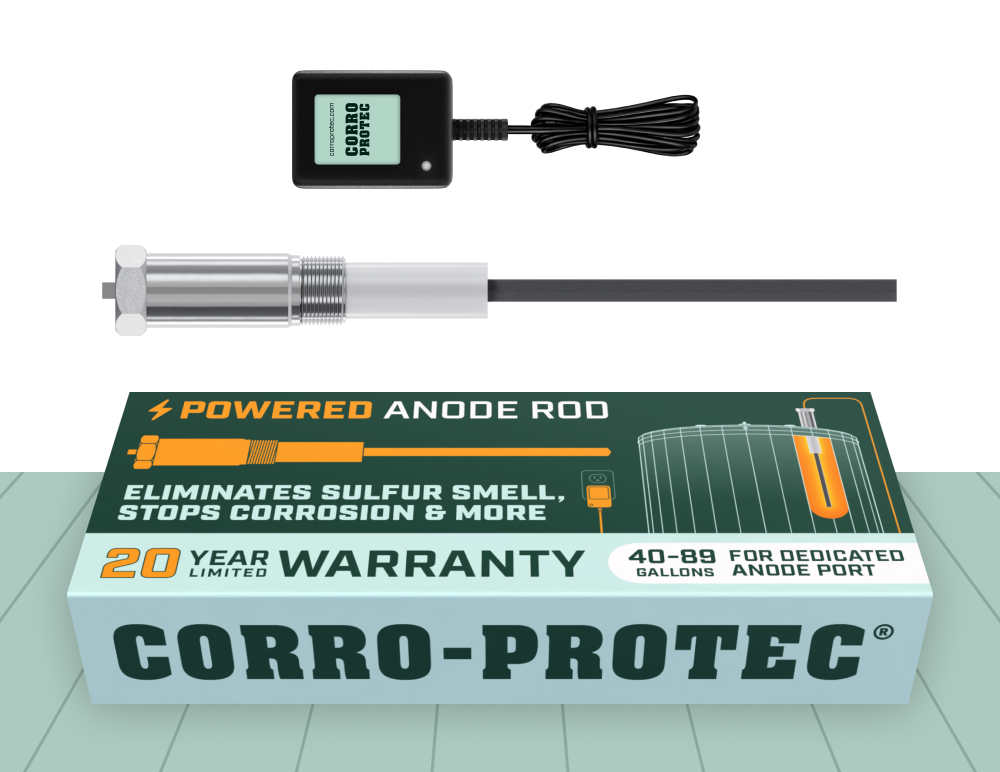
Powered anode rods, such as the Corro-Protec Water Heater Anode Rod, are the most reliable long-term solution for Richmond water heaters. Unlike sacrificial rods that corrode over time, powered rods use a small electrical current to neutralize corrosive reactions inside the tank.
Key benefits include:
- Eliminates sulfur and “rotten-egg” odors in hot water.
- Works with all Richmond gas and electric models.
- Prevents rust and reduces scale buildup inside the tank.
- Maintenance-free once installed.
- 20-year limited warranty when registered.
Protecting Your Investment
Your Richmond hot water heater is a key appliance in your home, providing hot water for cooking, cleaning, and bathing. Installing a powered anode rod from Corro-Protec is one of the most effective ways to ensure years of reliable performance.
FAQ
Richmond is a registered trademark of Rheem Manufacturing Company. Corro-Protec is not affiliated with, endorsed, or sponsored by Rheem Manufacturing Company or Richmond.
Blog
Richmond Water Heater Anode Rod – Location, Replacement & Upgrade Guide
If you own a Richmond hot water tank, maintaining the anode rod is one of the most crucial steps you can take to extend the […]

Best Type of Anode Rod for Residential Water Heaters
What Is an Anode Rod? An anode rod is a metal rod inserted into your water heater tank to prevent rust and corrosion. Traditional anode […]