Why a Powered Anode Rod Helps You Save Energy and Money Long-Term

Limescale buildup inside water heaters is one of the most common and underestimated causes of wasted energy. It may seem like a small layer of mineral deposits, but it can quietly increase your energy consumption by 5 to 10% every year.
Our long-term testing has shown how controlling scale formation with a powered anode makes a real difference, both for your water heater’s performance and your wallet.
How Limescale Affects Your Energy Bill
When water is heated, dissolved minerals like calcium and magnesium precipitate and form a hard layer of limescale on the heating surfaces. This layer acts as an insulator, forcing your water heater to work harder to reach the same temperature.

- 1/16″ of scale can increase energy use by 4–7% (U.S. Department of Energy).
- Scale builds faster in hard water regions, which represent more than 85% of homes in North America.
- Even in moderate water hardness, energy loss compounds over time.
Real Test Results: Up to 9.75% Less Energy Use
We ran a 569-day side-by-side test on two identical 6-gallon electric water heaters:
| Period | Tank with Corro-Protec Powered Anode Rod | Tank with Magnesium Anode Rod | Energy Saved | % Difference |
|---|---|---|---|---|
| 30 days | 881.5 kWh | 884.3 kWh | 2.8 kWh | 0.3 % |
| 1 year | 8081.5 kWh | 8914.1 kWh | 832.6 kWh | 9.3 % |
| 569 days | 8396.5 kWh | 9303.8 kWh | 907.3 kWh | 9.75 % |
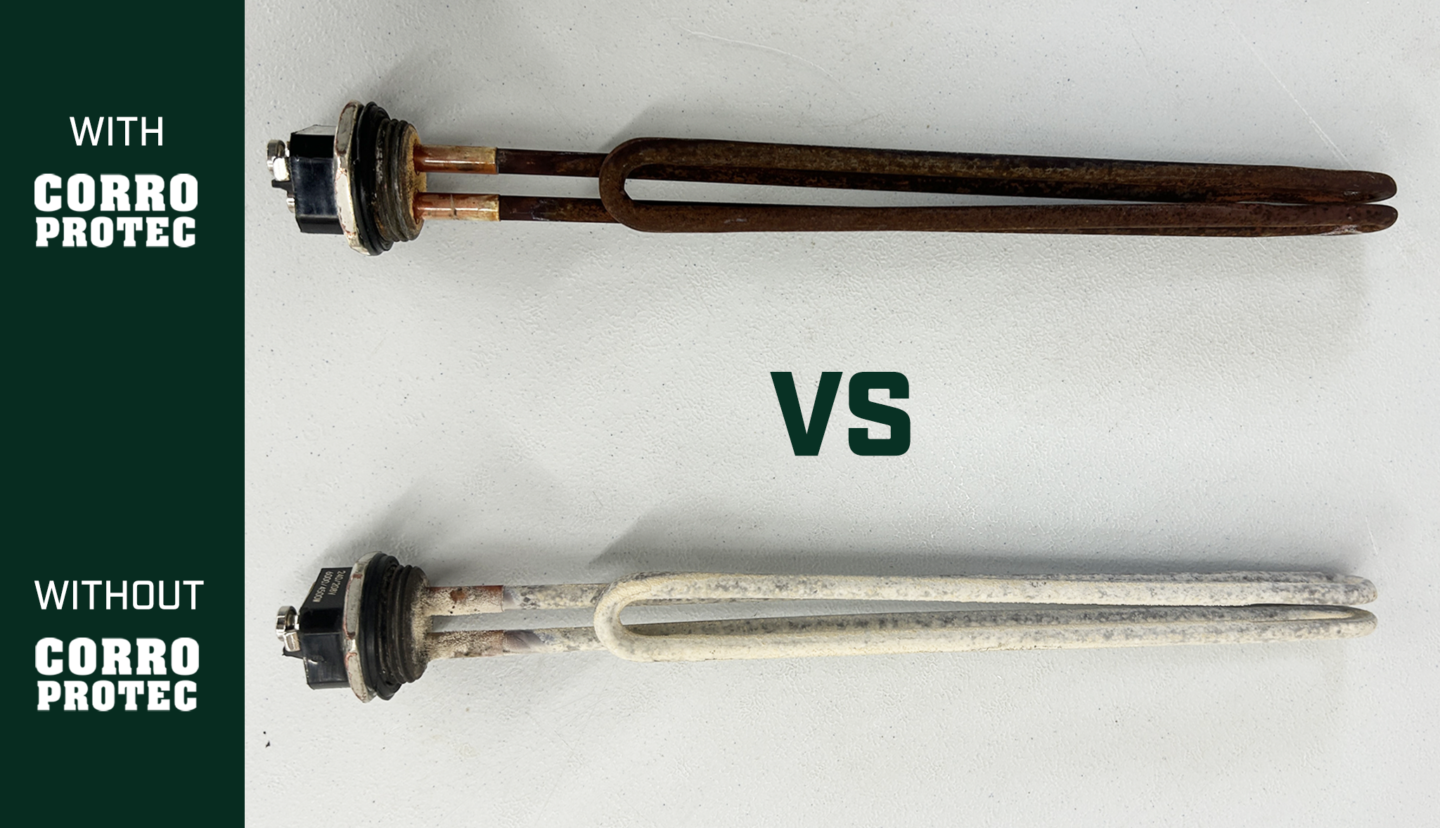
Even in low-hardness water, the Corro-Protec anode kept the heating element clean, while the magnesium tank developed a visible layer of scale. In typical households, these savings translate to:
- Up to $45/year in the U.S.
- $30–35/year in Canada
- Around $20/year in Québec
This energy efficiency gain comes on top of the odor protection and corrosion prevention benefits powered anodes already provide.
“But Corro-Protec Is More Expensive…” Not Really
It’s true that Corro-Protec has a higher initial purchase price than a magnesium or aluminum anode. But it’s designed to last the lifetime of your water heater, no replacements every 2–4 years, no extra service calls.
✅ Over time, the numbers speak for themselves:
- Lower energy bills
- No need to replace sacrificial anodes
- Less maintenance and better tank longevity
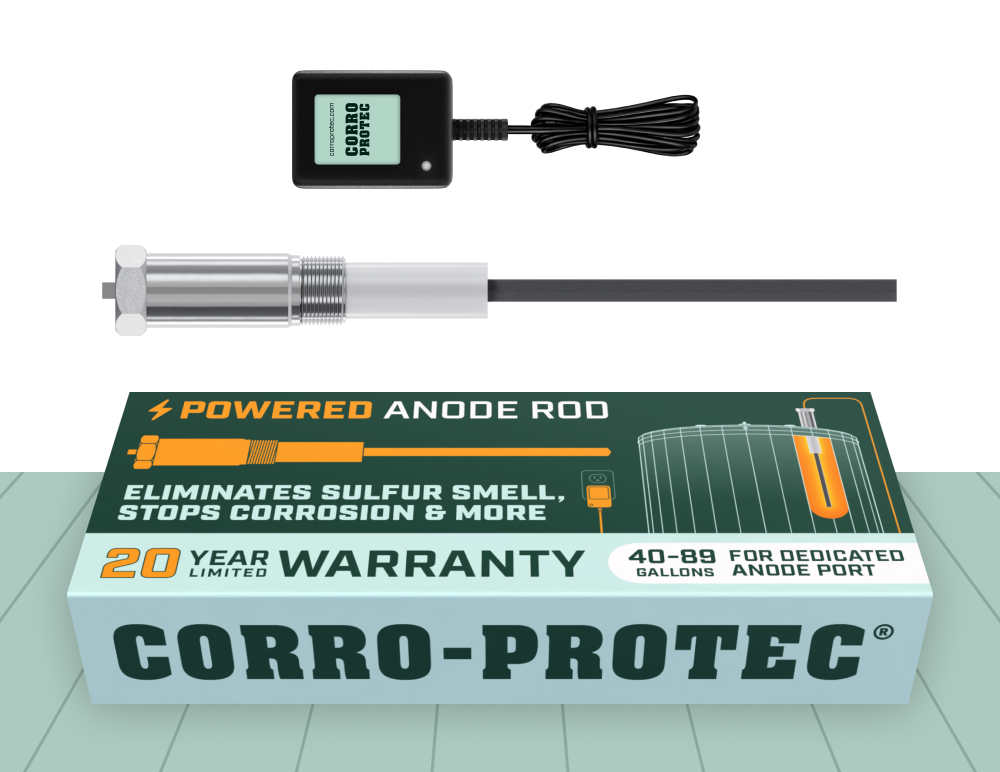
According to our internal data, the annual power consumption of a Corro-Protec anode costs around $2 to $3 per year to operate, essentially negligible compared to the $30 to $45 per year saved by reducing scale buildup.
Bottom line: Corro-Protec isn’t more expensive, it pays for itself in just a few years.
Why This Matters
- Extends water heater life by reducing corrosion and scale
- Reduces energy consumption year after year
- Protects against hot water odor
- No maintenance or replacement required
Limescale is inevitable, but you can control and limit its impact. A powered anode like Corro-Protec is the smart, long-term solution that saves energy and money.
Blog
11 No-Brainer Situations to Upgrade to a Powered Anode Rod
If you’ve dealt with premature tank failure, recurring sulfur smells, or the hassle of replacing sacrificial rods, you already know how frustrating and costly traditional […]

Where Is the Anode Rod on a Water Heater?
If you’ve ever wondered, “Where is the anode rod on my water heater?” you’re not alone. Homeowners often feel confused and are left searching when […]