Why Does My Hot Water Smell Like Rotten Eggs?

In most cases, a rotten egg smell in your water is caused by the anode rod inside your hot water tank. These rods are designed to attract corrosive elements in the water, protecting the steel liner from corrosion.
As the anode rod degrades or reacts chemically with the water, it can produce an unpleasant odor. You are not alone if you have ever turned on the hot water tap, only to be met with a foul smell reminiscent of rotten eggs.
This unpleasant odor is a common issue many homeowners face, particularly those using well water or older water heaters.
Common Causes of Rotten Egg Smell in Hot Water
Corroded Anode Rods in Water Heaters
Anode rods are designed to prevent water heaters from corroding. However, over time, these rods can react with naturally occurring sulfates in your water, producing hydrogen sulfide gas—the main culprit behind the rotten egg smell.
The Role of Sulfate-Reducing Bacteria
Sometimes, sulfur-reducing bacteria can thrive in your water heater tank’s warm, anaerobic environment. These bacteria convert sulfates in the water into hydrogen sulfide gas, which then escapes when you run the hot water.
Stagnant Water in Tanks
Water can become stagnant if you have been away on an extended vacation or haven’t used your hot water heater for an extended period. This stagnation creates an ideal breeding ground for bacteria, exacerbating the sulfur smell.
Well Water and Rotten Egg Smell
When heated, homes relying on well water often have higher sulfur levels, contributing to the rotten egg smell. If this is a recurring issue, it’s worth testing your water for high sulfur content.
Smelly hot water?
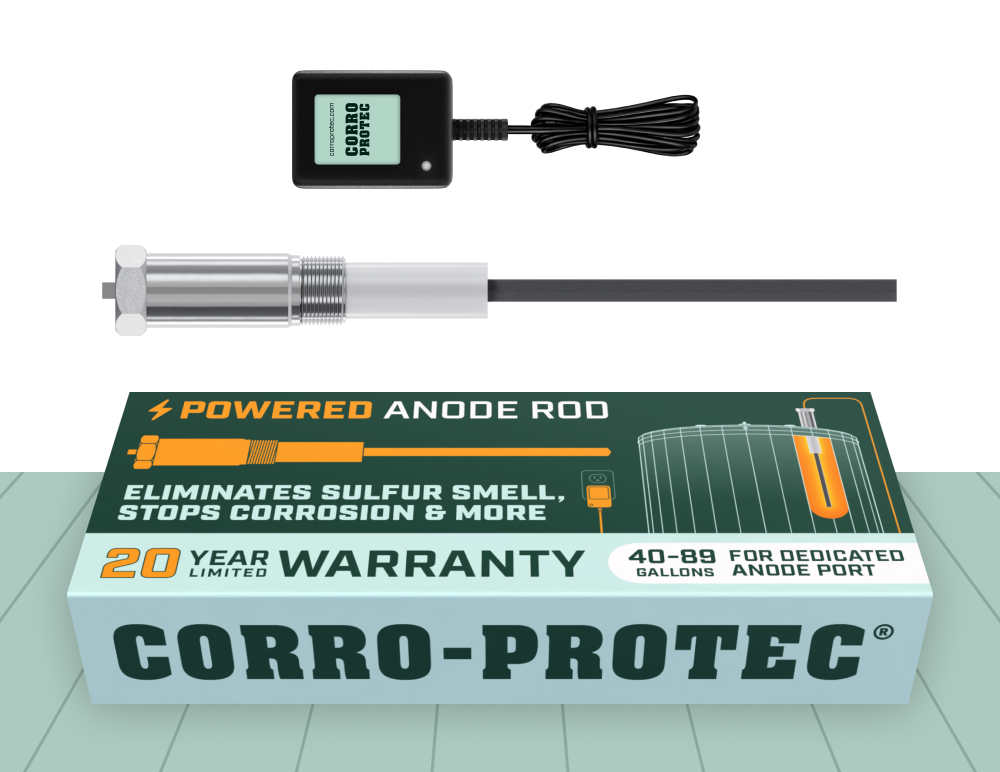
Wave goodbye to the rotten egg smell in your hot water and give your water heater a longer life with the Corro-Protec powered anode rod. Discover how this innovative solution eliminates odors and keeps your tank protected!

Identifying the Source of the Smell
Try running the cold and hot water taps separately to identify whether the odor comes from your water heater or water supply. If only the hot water smells, the issue likely lies in your water heater.
Electric vs. Gas Water Heaters
Does the type of water heater you own make a difference? Not necessarily. Both electric and gas water heaters can develop this issue if anode rods corrode or bacteria are present.
RV and Camper Hot Water Smells
The problem can be particularly pronounced for RV and camper owners due to smaller water tanks and limited filtration systems. Stagnation during storage periods can worsen the smell.
How to Fix Hot Water That Smells Like Rotten Eggs
Replace or Upgrade the Anode Rod
Consider replacing your standard anode rod with a powered anode rod. These prevent corrosion without contributing to the sulfur smell, making them an excellent solution for homes with recurring issues.
Flush and Clean Your Water Heater
Drain the tank, clean it thoroughly, and refill it with fresh water. Adding hydrogen peroxide during cleaning can help eliminate bacteria.
Treating the Water Supply
If your well water is the root cause, installing a filtration system to remove sulfur can provide long-term relief. Carbon filters or reverse osmosis systems are effective options.
Preventing Future Rotten Egg Smells
Routine Maintenance for Your Water Heater
To keep your water heater in top shape, flush it at least once a year and inspect the anode rod regularly. Replacing the rod every few years can prevent many common issues.
Solutions for RV and Camper Owners
Invest in portable water filters and regularly clean your water system. Consider a water heater designed specifically for RV use, with built-in sulfur filtration.
Avoiding Stagnation During Vacations
Drain your water heater before leaving for an extended trip to prevent stagnation and bacterial growth.
Take Action
Understanding the causes of rotten egg smells in hot water and taking preventative steps can ensure your home’s water supply stays clean and odor-free. Regular maintenance and the right upgrades—like a powered anode rod—can make a significant difference in keeping your water heater in great shape.
FAQ
You can remove the bad smell in your hot water by removing the reacting magnesium anode rod that comes in contact with the magnesium in the water. However, this deprives your water heater of its only protection against rust. You can choose an aluminum anode rod that requires more maintenance or the titanium Corro-Protec impressed current anode that eliminates unpleasant odours and offers 20 years of protection against rust.
If your hot water smells like oil, it is possible that the water supply or plumbing has been contaminated with gasoline, oil or bacteria. This can be a health risk. In rarer cases, you may notice an oil smell in a new water heater caused by a chemical reaction between the water and the tank components. This should disappear in a few weeks.
If your hot water smells like onions, it can be caused by different factors. Here is a list of the main factors:
- – A prolonged absence can dry out the pipes and lead to onion and sewer odour
- – A clogged drain
- – Incorrect temperature setting of the water heater that causes bacteria to grow
- – The metal in the water heater tank
The smell is usually caused by hydrogen sulfide gas, often produced by bacteria or organic material in your RV’s water system. If the odor is mainly in the hot water, it can also be linked to a reaction inside the water heater, especially with a magnesium anode rod.
The rotten egg smell in hot water is usually caused by hydrogen sulfide gas. This gas can form inside the water heater when sulfur-reducing bacteria interact with sulfates in the water, especially in the presence of a magnesium anode rod. The warm environment inside the tank creates ideal conditions for this reaction.
Even a new water heater can develop a rotten egg smell if the incoming water contains sulfur. Most new tanks come with a new magnesium anode rod, which is designed to prevent rust. In some water conditions, especially with well water, the magnesium can react with sulfates and contribute to hydrogen sulfide gas production inside the tank.
If your previous water heater had a depleted or missing anode rod, you may not have noticed the odor before. Installing a new tank with a new magnesium rod can restart the reaction. Upgrading to a powered anode rod can help prevent this reaction and reduce odor issues in new systems.
Blog

Drinkable – The Water Podcast with Greg Reyneke
We joined Greg Reyneke, President of the Water Quality Association, on Drinkable: The Water Podcast to discuss powered anode technology, water heater protection, and the […]

Does a Powered Anode Rod Void Your Water Heater Warranty in Canada?
A compatible, properly installed powered anode rod should not void a Canadian water heater warranty. Replacing a sacrificial anode with a powered anode is standard anode maintenance, […]