How to Find and Upgrade the Anode Rod on a Giant Water Heater

The anode rod is one of the most important parts of your hot water tank. It helps reduce rust, protect your water quality, and extend the usable life of your heater. Knowing where it is, and when to replace it, can help you get the most out of your water heater. Checking your water heater anode rod is an important thing to do.
We’ll show you where to find the anode rod in your GIANT water heater, why it matters, and why many homeowners choose to upgrade to a powered anode rod for more consistent protection.
Where to Find the Anode Rod on a GIANT Water Heater
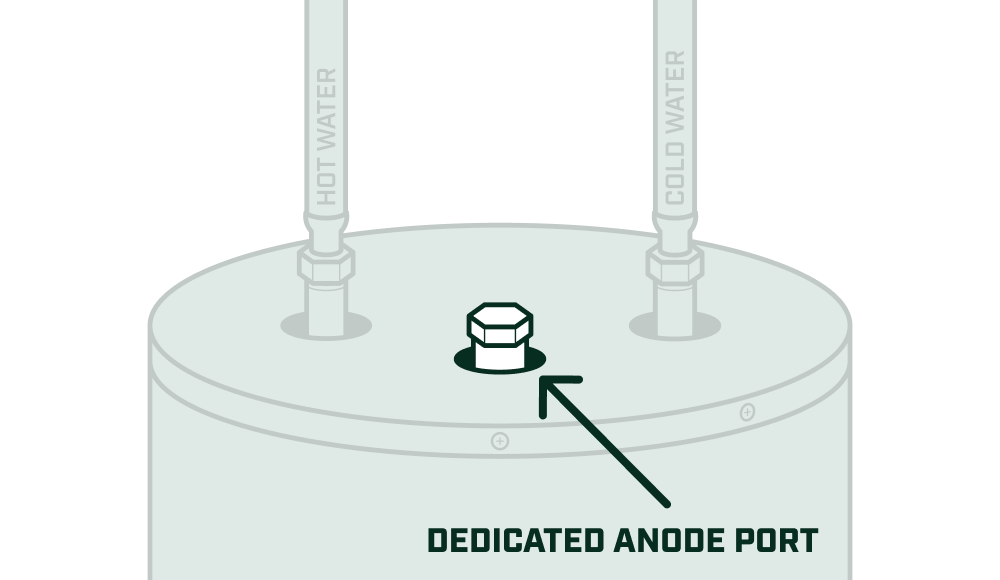
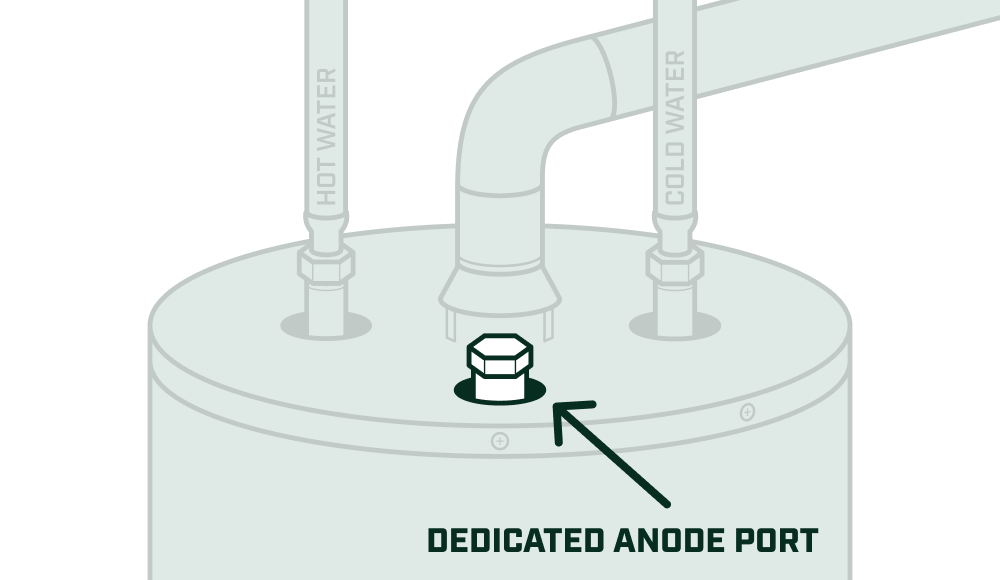
For most GIANT hot water heaters, the anode rod is located on the top of the tank. It is often placed under a plastic cap and resembles a hexagonal (six-sided) plug.
- GIANT Electric Water Heaters: The anode rod is usually near the hot water outlet on top of the tank.
- GIANT Gas Water Heaters: Similar location – look for a hex bolt cap near the plumbing connections.
GIANT Greenfoam Models: These energy-efficient models also have anode rods on top, though extra insulation may make them harder to spot.
How to Check and Replace the Anode Rod
If your GIANT water heater is more than three years old, and you have not performed general maintenance on it, it’s a good idea to check the anode rod. Here’s how:
Step 1
Turn off the power or gas supply to the water heater.
Step 2
Close the water valve and relieve tank pressure by opening a hot water faucet.
Step 3
Locate the anode rod hex head on top of the tank.
Step 4
Use an impact wrench or a ratchet wrench to loosen and remove the rod. For a complete walkthrough, click the button below :
Step 5
Inspect it if more than 6 inches of the steel core is exposed, replacement may be needed. Install the new rod: Corro-Protec Powered Anode Rod.
Limitations of Traditional Anode Rods
While sacrificial anode rods are designed to help protect your GIANT water heater, they come with drawbacks:
Advantages of a Powered Anode Rod for GIANT Water Heaters
Instead of sacrificing itself, a powered anode rod uses a small electrical current to help prevent corrosion. This offers long-term performance without frequent replacement.
Some of the advantages include:
- Compatible with all models: Works with electric, gas, hybrid, and Greenfoam units.
- Odor control: Helps eliminate the rotten egg smell caused by some sacrificial rods.
- Maintenance-free: Does not need to be replaced.
- Tank protection: Helps keep your GIANT water heater in better condition.
Comparison between Powered Anode Rod and Sacrificial Anode Rod
Standard
Sacrifical anode rod
Anode Material
Magnesium or Aluminum
Typical Lifespan*
1 to 6 years
Energy savings
Increase energy use due to sediment buildup
Corro-Protec
Powered anode rod
Anode Material
Titanium (Impressed-Current)
Typical Lifespan*
25+ yrs
Energy savings
Reduces energy bills by $40/year by preventing sediment buildup
Learn more about the Corro-Protec Powered Anode Rod.
Why Anode Rod Care Matters for GIANT Water Heaters
A GIANT water heater can last many years with regular maintenance. Checking and replacing the anode rod or upgrading to a powered option,
helps keep the tank in good condition and supports more reliable performance over time.
Shop the Corro-Protec Powered Anode Rod to see how it can support your GIANT water heater.
FAQ
The anode rod in your Giant water heater is located on top of your tank. More precisely, your magnesium or aluminum sacrificial anode is visible through a hexagonal head located in the center of your tank under a plastic cover. Refer to your water heater’s user guide for more information.
No, the Corro-Protec powered anode rod does not void your Giant water heater warranty. In fact, manufacturers consider powered anode rods maintenance parts that support the proper functioning and longevity of the tank. Anode inspection and maintenance every 1–2 years are typically required to maintain the manufacturer’s warranty.
Replacing a sacrificial anode with a powered anode is standard anode maintenance, not a prohibited modification. Therefore, installing a compatible, properly installed powered anode rod should not void your water heater warranty.
In the United States, warranty protection is governed by the Magnuson-Moss Warranty Act and, in Canada, by various provincial consumer protection laws.
To understand how warranty protection works in the U.S. and Canada, what can actually void a water heater warranty, which certifications matter, and how to choose and install a powered anode rod without creating unnecessary warranty risks, read our complete guide to water heater warranties.
GIANT’s warranty states that all anodes must be checked at least once every 2 years and replaced if needed to meet the maintenance requirements. Always follow the inspection and replacement schedule in your owner’s manual to keep your warranty valid. If you have a powered anode rod (titanium), it does not deplete like a sacrificial anode, so it typically doesn’t require replacement.
If the sacrificial anode rod is left to deteriorate completely, the tank itself can start corroding. This can lead to rust, leaks and eventually tank failure, which is far more expensive to replace.
Blog

Where Is the Anode Rod on a Water Heater?
If you’ve ever wondered, “Where is the anode rod on my water heater?” you’re not alone. Homeowners often feel confused and are left searching when […]

State Water Heater Anode Rods: Location, Maintenance & Replacement
If you own a State* water heater, you already count on it for hot showers and clean dishes. But one hidden part, the anode rod, […]