Complete Guide to Powered Anodes and Water Heater Warranties

Do Powered Anode Rods Void Water Heater Warranties?
Installing a compatible, properly installed powered anode rod should not void your water heater warranty. Replacing a sacrificial anode with a powered anode is standard anode maintenance, not a prohibited modification.
This guide explains how warranty protection works in the U.S. and Canada, what can actually void a water heater warranty, which certifications matter, and how to choose and install a powered anode rod without creating unnecessary warranty risks.
How Corro-Protec Customers Are Protected Under the Law
If you are asking, “Does a powered anode rod void my warranty?” you are not alone. Consumer protection laws in both the United States and Canada provide important protections for homeowners and help clarify how aftermarket parts may affect water heater coverage.
United States: The Magnuson-Moss Warranty Act
In the U.S., you are protected by the Magnuson-Moss Warranty Act. Enacted in 1975, this federal law prevents manufacturers from declaring your warranty void simply because you used an aftermarket or third-party part.
Under the Magnuson-Moss Warranty Act, “tie-in sales” are prohibited. This means that a manufacturer such as Rheem or Bradford White cannot require you to buy its own branded replacement parts to keep your warranty valid. Unless the manufacturer can demonstrate that your aftermarket powered anode rod directly caused the tank to fail, your water heater warranty remains valid.
Canada: Provincial Consumer Protections
In Canada, water heater warranty guidelines operate under similar principles. Various Canadian provincial consumer protection and sale-of-goods laws require manufacturers to establish a causal link between an aftermarket part and a failure before denying coverage. Warranties cannot be arbitrarily voided for routine maintenance or third-party upgrades. As in the U.S., the manufacturer must demonstrate that the aftermarket part caused the appliance’s failure.
The Long-Term Benefits of Making the Switch
Understanding your powered anode rod warranty protections allows you to better understand the benefits of this upgrade. These benefits extend beyond eliminating foul odors:
| Long-Term Benefits of the Corro-Protec Powered Anode Rod | How It Benefits Your Water Heater |
| Long-Term Protection | If you want to know how to stop water heater tank corrosion permanently, an impressed current rod is the answer. As long as it has power, your tank is protected. |
| Zero Maintenance | The benefits of maintenance-free electronic anode rods mean you no longer have to wrestle with a rusted, calcified magnesium rod every three to five years. |
| Energy Efficiency | A tank free of corrosive sediment buildup heats water faster and uses less energy, lowering your utility bills. |
Compliant Powered Anode Rod: Certifications and Safety Standards
When choosing a powered anode rod, compliance matters. Corro-Protec anodes are designed for potable water applications and use a certified power supply that meets recognized North American safety standards.
WQA Gold Seal Certified to NSF/ANSI/CAN 372
Corro-Protec anodes are WQA Gold Seal certified to NSF/ANSI/CAN 372 for lead-free drinking water applications. This certification confirms that the anode meets lead-free requirements for products used in potable water systems.
ETL-certified Power Supply Compliant with UL 1310 / CSA C22.2 No. 223
The Corro-Protec powered anode rod uses an ETL-certified power supply compliant with UL 1310 and CSA C22.2 No. 223. These standards help confirm that the power supply meets recognized electrical safety requirements for use with the water heater system.
Designed and Manufactured in Canada Since 2006
Founded in Canada in 2006, Corro-Protec has been specializing in powered anode technology for nearly 20 years. With 350,000+ anodes installed and no reported warranty denial linked to a Corro-Protec anode, the product has a strong track record in residential water heater protection.
As with any anode rod replacement, always follow the installation instructions, confirm compatibility with the water heater, and respect local plumbing and electrical codes.
Recommended by 1,500 North American Experts
We have more than 1,500 points of sale and reseller locations across Canada and the United States. Plumbers, water treatment specialists, and plumbing retailers recommend our powered anode rods every day for their corrosion protection, sediment buildup reduction, hot water odor elimination, and 20-year warranty.
What Voids a Water Heater Warranty? Common Maintenance and Installation Issues
Failure to Maintain or Replace the Anode Rod
Ironically, failing to replace a depleted sacrificial rod will void your warranty if the tank rusts out. Upgrading to a powered rod actually prevents this neglect. Anode rod maintenance is one of the most common warranty requirements for tank-style water heaters. Most manufacturer manuals require homeowners to inspect the anode periodically and replace it when it is depleted. If the anode is ignored and the tank rusts from the inside, the manufacturer may refuse coverage because required maintenance was not performed.
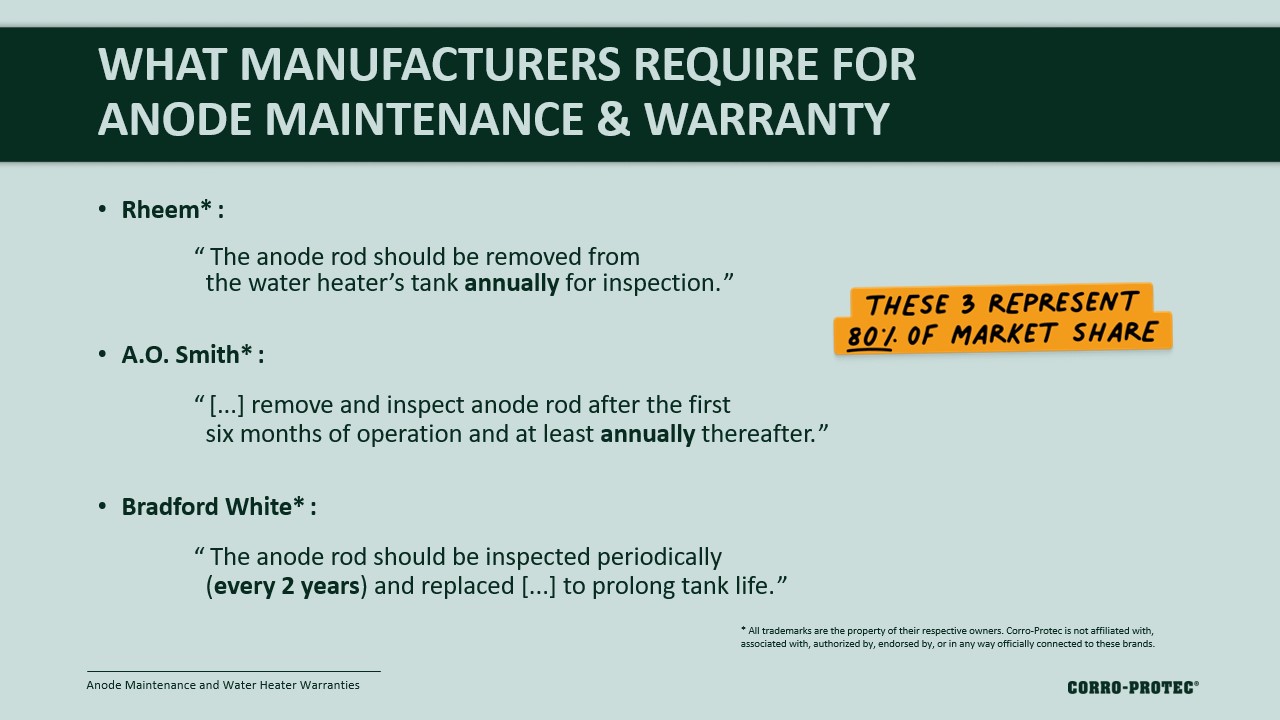
As shown above, Rheem, A. O. Smith, and Bradford White all include anode inspection requirements in their maintenance documentation. Depending on the manufacturer, inspection may be required annually, after the first six months, or at regular intervals.
This is why anode replacement is not considered an unusual modification. The anode is a normal service part, available in different formats such as magnesium, aluminum, and secondary anodes. It is designed to be inspected, removed, and replaced over the life of the water heater.
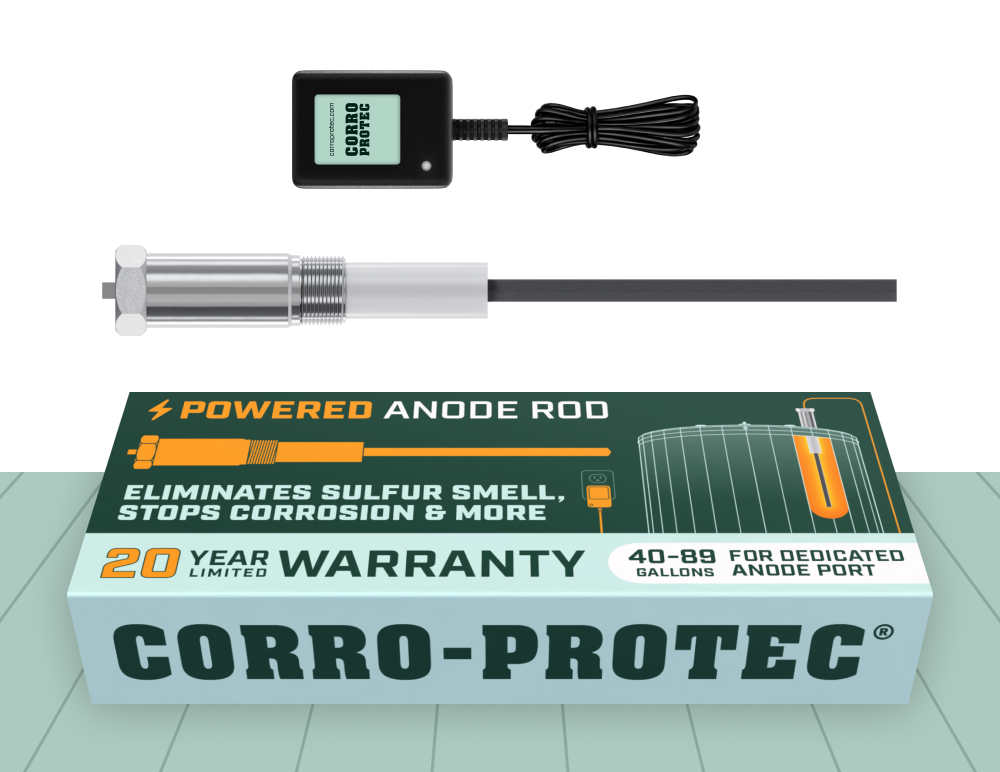
A powered anode rod supports this maintenance requirement by replacing the original sacrificial anode with a non-sacrificial titanium anode that continues protecting the tank without depleting like magnesium or aluminum.
Failure to Account for Water Chemistry
Water chemistry can affect corrosion, odor, scale, and anode depletion. Softened water, chlorides, well water, high total dissolved solids, and other local water conditions may increase the need for maintenance.
For example, water softeners can accelerate the depletion of sacrificial anode rods. In these conditions, manufacturers may recommend more frequent anode inspection. If the water heater is exposed to aggressive water conditions and maintenance is skipped, the warranty claim may be harder to support.
A powered anode rod can be a better long-term option in challenging water conditions because it does not sacrifice itself into the tank and is designed to provide consistent corrosion protection.
Sediment Buildup From Skipped Flushing
Sediment buildup can reduce water heater performance, increase noise, lower efficiency, and shorten tank life. When minerals and debris collect at the bottom of the tank, they can create hot spots, reduce heat transfer, and contribute to long-term damage.
Manufacturers often recommend periodic flushing to help control sediment. If a tank fails because it was never flushed or maintained, the issue may be treated as neglect rather than a covered defect.
Unlike a sacrificial anode, a titanium powered anode does not break down and leave depleted metal particles at the bottom of the tank. This can help reduce one source of sediment inside the water heater while maintaining corrosion protection.
Incorrect Installation or Incompatible Parts
Incorrect installation can create real warranty problems. This applies to any replacement part, not just anode rods. Like with a car, using a replacement part is not usually the issue. The problem is whether the part was incompatible, installed incorrectly, or caused damage.
For water heaters, this could include improper wiring, damaged threads, leaks caused during installation, the wrong anode size, or failure to follow the manufacturer’s instructions and local plumbing or electrical codes.
To protect warranty coverage, always confirm compatibility, follow the installation instructions, and keep proof of proper installation and maintenance.
Installation Best Practices for Warranty Compliance
To ensure your water heater warranty remains, the installation of your powered anode rod must be done correctly.
Professional vs. DIY Installation
When weighing professional vs DIY water heater anode replacement, consider your comfort level with plumbing and basic tools. Installing a powered rod is generally a straightforward DIY job requiring an impact wrench, a 1-1/16″ (27 mm) socket (used to remove your old sacrificial anode rod), a 1-3/16″ (31 mm) socket (used to install the Corro-Protec powered anode rod) and some Teflon tape. However, if you are unsure, hiring a licensed plumber ensures the job is done to code, which removes any manufacturer argument of “improper installation.”
Prioritize Safety and Certifications
When selecting a powered rod, safety is paramount. You must focus on maintaining UL listing after water heater modifications. Ensure the powered anode rod you purchase is UL-listed or CSA-certified. Adding a non-certified electrical device to a water tank is a fast way to void your warranty and compromise your home insurance policy. Always buy reputable brands that feature built-in power supplies engineered specifically for residential water heaters.
What to Do If a Manufacturer Says an Aftermarket Anode Voids the Warranty
If a manufacturer, distributor, or service provider says your warranty is void because you installed an aftermarket powered anode rod, ask them to put the reason in writing. A general statement such as “aftermarket parts void the warranty” is not enough. The key question is whether the replacement part or its installation caused or contributed to the specific failure.
Ask for a written explanation that includes:
- The exact warranty clause being used to deny coverage
- The specific failure found in the water heater
- How the powered anode or its installation caused or contributed to that failure
- Any inspection report, photos, test results, or technician notes used to support the decision
If the explanation is unclear, ask for the claim to be escalated to a warranty supervisor or technical support representative. You can also ask whether the denial is based on the presence of an aftermarket part alone, or on evidence that the part caused the problem.
How to Choose a Powered Anode Rod Without Risking Your Warranty
To choose a powered anode rod without risking your water heater warranty, look for a brand that clearly documents compatibility, safety certifications, installation requirements, and support policies. The safest choice is a powered anode that can be installed as a standard anode replacement without modifying the water heater.
Confirm Water Heater Compatibility
Choose a powered anode rod that clearly states which water heater types it works with, including electric, gas, residential, and tank size compatibility. The brand should also specify the required anode port, thread size, or hot water outlet installation option when needed.
Check Potable Water Compliance
A powered anode rod is installed in a potable water system, so drinking water compliance matters. Look for documented lead-free compliance, such as NSF/ANSI/CAN 372 or an equivalent standard for components in contact with drinking water. This helps show that the product is designed for safe use in residential water heaters.
Verify Electrical Safety Certification
Because powered anode rods use a power supply, electrical safety certification should be documented. Look for UL, ETL, CSA, or equivalent certification for the power supply under applicable North American safety standards.
The product should be intended for permanent indoor residential use and should not require unsafe wiring or electrical modifications.
Review the Installation Requirements
Choose a brand with clear, complete installation instructions. The guide should explain the sealing method, placement of the power supply, cable routing, startup steps, and troubleshooting.
A warranty-safe installation should not require cutting, drilling, bypassing safety devices, or rewiring the water heater. The powered anode should install like a replacement part, not a heater modification.
Look for Written Warranty Guidance
The brand should provide written guidance explaining how its powered anode relates to manufacturer warranties. Ideally, this guidance should explain that warranty disputes depend on whether the part or its installation caused the failure, not simply on the use of an aftermarket anode.
This documentation is useful if a manufacturer, plumber, or distributor questions the installation.
Choose a Brand With Accessible Support and Documentation
Keep the invoice, installation date, model compatibility information, product specifications, and certification documents. A reliable brand should make these documents easy to access and should offer support if you need help with a warranty question.
Good documentation helps show what was installed, when it was installed, and whether it was compatible with the water heater.
Consider Materials and Water Chemistry
The powered anode should use materials suited for long-term use inside a water heater, such as a non-sacrificial titanium anode and corrosion-resistant fittings. Cable insulation, fittings, and power supply placement should also be appropriate for the installation environment.
Water chemistry also matters. Well water, softened water, high chlorides, and high total dissolved solids can affect corrosion, odor, and tank performance. Choose a powered anode brand that explains how its product performs in different water conditions.
Look for a Proven Track Record
Choose an established powered anode brand with real installation history, clear support policies, and verified customer feedback. Be cautious with brands that rely only on broad “universal” claims without certifications, installation details, or warranty guidance.
The best powered anode rod brand for warranty peace of mind is one that proves compatibility, documents compliance, explains installation clearly, and supports customers if questions come up.
Be Careful With Copycat and Short-Lived Marketplace Brands
When buying a powered anode rod online, be cautious with copycat products and brands that appear and disappear quickly on e-commerce platforms such as Amazon. Some listings may use similar product names, images, or claims without offering the same certifications, support, warranty guidance, or long-term reliability.
A low-cost powered anode rod can become a warranty risk if the seller cannot provide clear documentation, installation instructions, compatibility details, or proof of electrical and drinking water compliance. If the brand disappears, changes names, or removes the listing, it may also be difficult to get support if you need help with installation, troubleshooting, or a warranty question later.
Before buying, check whether the brand has an established website, accessible customer service, clear product documentation, published certifications, and a real track record outside of a single marketplace listing. For warranty peace of mind, choose a powered anode rod from a manufacturer that stands behind the product, not just a temporary online seller.
Want details specific to your country?
Read our dedicated articles on the Magnuson-Moss Warranty Act in the U.S. and provincial sale-of-goods laws in Canada.
Frequently Asked Questions About Powered Anodes and Water Heater Warranties
No. Replacing a sacrificial anode with a compatible, properly installed powered anode is standard maintenance and, by itself, should not void your manufacturer’s warranty. In Canada, denying warranty coverage because of a third-party part generally requires the manufacturer to show that the part caused the failure, not simply that it was installed. This is governed by applicable provincial consumer protection laws.
No. Under the Magnuson-Moss Warranty Act, a manufacturer cannot void your warranty just because you used an aftermarket part. If the Corro-Protec powered anode rod is properly installed and compatible, its presence alone should not invalidate warranty coverage. A claim can only be denied if the manufacturer proves the anode directly caused the damage or if there was consumer misuse.
Yes. Replacing a sacrificial anode with a compatible, properly installed Corro-Protec Powered Anode Rod is standard anode maintenance, not a prohibited modification. Manufacturers typically require regular anode inspection and replacement when the sacrificial anode is depleted to maintain the manufacturer’s warranty.
Warranty protection also depends on applicable law. In the U.S., the Magnuson-Moss Warranty Act generally prevents a manufacturer from denying coverage solely because an aftermarket part was used. In Canada, provincial consumer protection laws apply. In both cases, a third-party part generally becomes a warranty issue when it causes or contributes to the failure, not simply because it was installed.
Install the powered anode according to the product instructions, confirm compatibility with your water heater, and follow local plumbing and electrical codes. If you are not comfortable with the installation, using a licensed plumber can help avoid warranty issues related to improper installation.
Also choose a product with recognized safety certifications. A compatible, properly installed Corro-Protec Powered Anode Rod should not, by itself, void your manufacturer’s warranty.
Manufacturers typically require anode inspection every 1–2 years and replacement when the sacrificial anode is depleted. How quickly an anode depletes can vary based on water chemistry, anode material, water usage, and other conditions.
Because anode replacement is part of required water heater maintenance, replacing a depleted sacrificial anode with a compatible powered anode is standard anode maintenance, not a prohibited modification.
Ask the manufacturer to identify the specific warranty term they believe applies and explain how the aftermarket anode caused or contributed to the failure. Keep your installation records, receipts, product documentation, and photos.
In the U.S., the Magnuson-Moss Warranty Act generally prevents a manufacturer from denying coverage solely because an aftermarket part was used. In Canada, applicable provincial consumer protection laws also apply.
A compatible, properly installed Corro-Protec Powered Anode Rod should not, by itself, void the manufacturer’s warranty.
Choose a brand with accessible support, clear installation instructions, and proper documentation. Look for materials designed for long-term use inside a water heater and suitable for different water conditions.
A proven track record also matters. Be careful with copycat products and short-lived marketplace brands that may offer little technical support, unclear certifications, or warranties that could be difficult to claim.
Corro-Protec has been in the powered anode business since 2006, is backed by thousands of customer reviews, and is WQA Gold Seal certified. That proven track record, accessible support, and recognized certification make it a safer long-term choice when warranty compliance matters.
A water heater warranty may be affected by improper installation, misuse, lack of required maintenance, unauthorized modifications, or damage caused by an incompatible part. Installing a compatible Corro-Protec Powered Anode Rod properly should not, by itself, void your manufacturer’s warranty.
In the U.S., warranty protection is governed by the Magnuson-Moss Warranty Act. In Canada, warranty rights are also protected by applicable consumer protection laws. A third-party part generally becomes a warranty issue when it causes or contributes to the failure, not simply because it was installed.
The Magnuson–Moss Warranty Act is a U.S. federal law passed in 1975 that regulates written consumer product warranties. It requires clear warranty terms, restricts unfair warranty denials, allows consumers to use aftermarket parts and independent service providers, and provides legal recourse if a warranty is not honored. The FTC has affirmed that companies cannot deny warranty coverage solely because a third-party part or service was used when it is unrelated to the problem.
Use a compatible powered anode, follow the manufacturer’s installation instructions and local codes, and keep receipts and installation records. Clear documentation and proper installation make any warranty discussion more straightforward and help support your claim if issues arise. For more details, see our complete guide to powered anodes and water heater warranties.
No, the Corro-Protec powered anode rod does not void your Whirlpool water heater warranty. In fact, manufacturers consider powered anode rods maintenance parts that support the proper functioning and longevity of the tank. Anode inspection and maintenance every 1–2 years are typically required to maintain the manufacturer’s warranty.
Replacing a sacrificial anode with a powered anode is standard anode maintenance, not a prohibited modification. Therefore, installing a compatible, properly installed powered anode rod should not void your water heater warranty.
In the United States, warranty protection is governed by the Magnuson-Moss Warranty Act and, in Canada, by various provincial consumer protection laws.
To understand how warranty protection works in the U.S. and Canada, what can actually void a water heater warranty, which certifications matter, and how to choose and install a powered anode rod without creating unnecessary warranty risks, read our complete guide to water heater warranties.
No, the Corro-Protec powered anode rod does not void your Bradford White water heater warranty. In fact, manufacturers consider powered anode rods maintenance parts that support the proper functioning and longevity of the tank. Anode inspection and maintenance every 1–2 years are typically required to maintain the manufacturer’s warranty.
Replacing a sacrificial anode with a powered anode is standard anode maintenance, not a prohibited modification. Therefore, installing a compatible, properly installed powered anode rod should not void your water heater warranty.
In the United States, warranty protection is governed by the Magnuson-Moss Warranty Act and, in Canada, by various provincial consumer protection laws.
To understand how warranty protection works in the U.S. and Canada, what can actually void a water heater warranty, which certifications matter, and how to choose and install a powered anode rod without creating unnecessary warranty risks, read our complete guide to water heater warranties.
No, the Corro-Protec powered anode rod does not void your A. O. Smith water heater warranty. In fact, manufacturers consider powered anode rods maintenance parts that support the proper functioning and longevity of the tank. Anode inspection and maintenance every 1–2 years are typically required to maintain the manufacturer’s warranty.
Replacing a sacrificial anode with a powered anode is standard anode maintenance, not a prohibited modification. Therefore, installing a compatible, properly installed powered anode rod should not void your water heater warranty.
In the United States, warranty protection is governed by the Magnuson-Moss Warranty Act and, in Canada, by various provincial consumer protection laws.
To understand how warranty protection works in the U.S. and Canada, what can actually void a water heater warranty, which certifications matter, and how to choose and install a powered anode rod without creating unnecessary warranty risks, read our complete guide to water heater warranties.
No, the Corro-Protec powered anode rod does not void your Buderus water heater warranty. In fact, manufacturers consider powered anode rods maintenance parts that support the proper functioning and longevity of the tank. Anode inspection and maintenance every 1–2 years are typically required to maintain the manufacturer’s warranty.
Replacing a sacrificial anode with a powered anode is standard anode maintenance, not a prohibited modification. Therefore, installing a compatible, properly installed powered anode rod should not void your water heater warranty.
In the United States, warranty protection is governed by the Magnuson-Moss Warranty Act and, in Canada, by various provincial consumer protection laws.
To understand how warranty protection works in the U.S. and Canada, what can actually void a water heater warranty, which certifications matter, and how to choose and install a powered anode rod without creating unnecessary warranty risks, read our complete guide to water heater warranties.
No, the Corro-Protec powered anode rod does not void your GE water heater warranty. In fact, manufacturers consider powered anode rods maintenance parts that support the proper functioning and longevity of the tank. Anode inspection and maintenance every 1–2 years are typically required to maintain the manufacturer’s warranty.
Replacing a sacrificial anode with a powered anode is standard anode maintenance, not a prohibited modification. Therefore, installing a compatible, properly installed powered anode rod should not void your water heater warranty.
In the United States, warranty protection is governed by the Magnuson-Moss Warranty Act and, in Canada, by various provincial consumer protection laws.
To understand how warranty protection works in the U.S. and Canada, what can actually void a water heater warranty, which certifications matter, and how to choose and install a powered anode rod without creating unnecessary warranty risks, read our complete guide to water heater warranties.
No, the Corro-Protec powered anode rod does not void your Kenmore water heater warranty. In fact, manufacturers consider powered anode rods maintenance parts that support the proper functioning and longevity of the tank. Anode inspection and maintenance every 1–2 years are typically required to maintain the manufacturer’s warranty.
Replacing a sacrificial anode with a powered anode is standard anode maintenance, not a prohibited modification. Therefore, installing a compatible, properly installed powered anode rod should not void your water heater warranty.
In the United States, warranty protection is governed by the Magnuson-Moss Warranty Act and, in Canada, by various provincial consumer protection laws.
To understand how warranty protection works in the U.S. and Canada, what can actually void a water heater warranty, which certifications matter, and how to choose and install a powered anode rod without creating unnecessary warranty risks, read our complete guide to water heater warranties.
No, the Corro-Protec powered anode rod does not void your Reliance water heater warranty. In fact, manufacturers consider powered anode rods maintenance parts that support the proper functioning and longevity of the tank. Anode inspection and maintenance every 1–2 years are typically required to maintain the manufacturer’s warranty.
Replacing a sacrificial anode with a powered anode is standard anode maintenance, not a prohibited modification. Therefore, installing a compatible, properly installed powered anode rod should not void your water heater warranty.
In the United States, warranty protection is governed by the Magnuson-Moss Warranty Act and, in Canada, by various provincial consumer protection laws.
To understand how warranty protection works in the U.S. and Canada, what can actually void a water heater warranty, which certifications matter, and how to choose and install a powered anode rod without creating unnecessary warranty risks, read our complete guide to water heater warranties.
No, the Corro-Protec powered anode rod does not void your Rheem water heater warranty. In fact, manufacturers consider powered anode rods maintenance parts that support the proper functioning and longevity of the tank. Anode inspection and maintenance every 1–2 years are typically required to maintain the manufacturer’s warranty.
Replacing a sacrificial anode with a powered anode is standard anode maintenance, not a prohibited modification. Therefore, installing a compatible, properly installed powered anode rod should not void your water heater warranty.
In the United States, warranty protection is governed by the Magnuson-Moss Warranty Act and, in Canada, by various provincial consumer protection laws.
To understand how warranty protection works in the U.S. and Canada, what can actually void a water heater warranty, which certifications matter, and how to choose and install a powered anode rod without creating unnecessary warranty risks, read our complete guide to water heater warranties.
No, the Corro-Protec powered anode rod does not void your Richmond water heater warranty. In fact, manufacturers consider powered anode rods maintenance parts that support the proper functioning and longevity of the tank. Anode inspection and maintenance every 1–2 years are typically required to maintain the manufacturer’s warranty.
Replacing a sacrificial anode with a powered anode is standard anode maintenance, not a prohibited modification. Therefore, installing a compatible, properly installed powered anode rod should not void your water heater warranty.
In the United States, warranty protection is governed by the Magnuson-Moss Warranty Act and, in Canada, by various provincial consumer protection laws.
To understand how warranty protection works in the U.S. and Canada, what can actually void a water heater warranty, which certifications matter, and how to choose and install a powered anode rod without creating unnecessary warranty risks, read our complete guide to water heater warranties.
No, the Corro-Protec powered anode rod does not void your Ruud water heater warranty. In fact, manufacturers consider powered anode rods maintenance parts that support the proper functioning and longevity of the tank. Anode inspection and maintenance every 1–2 years are typically required to maintain the manufacturer’s warranty.
Replacing a sacrificial anode with a powered anode is standard anode maintenance, not a prohibited modification. Therefore, installing a compatible, properly installed powered anode rod should not void your water heater warranty.
In the United States, warranty protection is governed by the Magnuson-Moss Warranty Act and, in Canada, by various provincial consumer protection laws.
To understand how warranty protection works in the U.S. and Canada, what can actually void a water heater warranty, which certifications matter, and how to choose and install a powered anode rod without creating unnecessary warranty risks, read our complete guide to water heater warranties.
No, the Corro-Protec powered anode rod does not void your Suburban water heater warranty. In fact, manufacturers consider powered anode rods maintenance parts that support the proper functioning and longevity of the tank. Anode inspection and maintenance every 1–2 years are typically required to maintain the manufacturer’s warranty.
Replacing a sacrificial anode with a powered anode is standard anode maintenance, not a prohibited modification. Therefore, installing a compatible, properly installed powered anode rod should not void your water heater warranty.
In the United States, warranty protection is governed by the Magnuson-Moss Warranty Act and, in Canada, by various provincial consumer protection laws.
To understand how warranty protection works in the U.S. and Canada, what can actually void a water heater warranty, which certifications matter, and how to choose and install a powered anode rod without creating unnecessary warranty risks, read our complete guide to water heater warranties.
No, the Corro-Protec powered anode rod does not void your Giant water heater warranty. In fact, manufacturers consider powered anode rods maintenance parts that support the proper functioning and longevity of the tank. Anode inspection and maintenance every 1–2 years are typically required to maintain the manufacturer’s warranty.
Replacing a sacrificial anode with a powered anode is standard anode maintenance, not a prohibited modification. Therefore, installing a compatible, properly installed powered anode rod should not void your water heater warranty.
In the United States, warranty protection is governed by the Magnuson-Moss Warranty Act and, in Canada, by various provincial consumer protection laws.
To understand how warranty protection works in the U.S. and Canada, what can actually void a water heater warranty, which certifications matter, and how to choose and install a powered anode rod without creating unnecessary warranty risks, read our complete guide to water heater warranties.
No, the Corro-Protec powered anode rod does not void your State water heater warranty. In fact, manufacturers consider powered anode rods maintenance parts that support the proper functioning and longevity of the tank. Anode inspection and maintenance every 1–2 years are typically required to maintain the manufacturer’s warranty.
Replacing a sacrificial anode with a powered anode is standard anode maintenance, not a prohibited modification. Therefore, installing a compatible, properly installed powered anode rod should not void your water heater warranty.
In the United States, warranty protection is governed by the Magnuson-Moss Warranty Act and, in Canada, by various provincial consumer protection laws.
To understand how warranty protection works in the U.S. and Canada, what can actually void a water heater warranty, which certifications matter, and how to choose and install a powered anode rod without creating unnecessary warranty risks, read our complete guide to water heater warranties.
Blog
Drinkable – The Water Podcast with Greg Reyneke
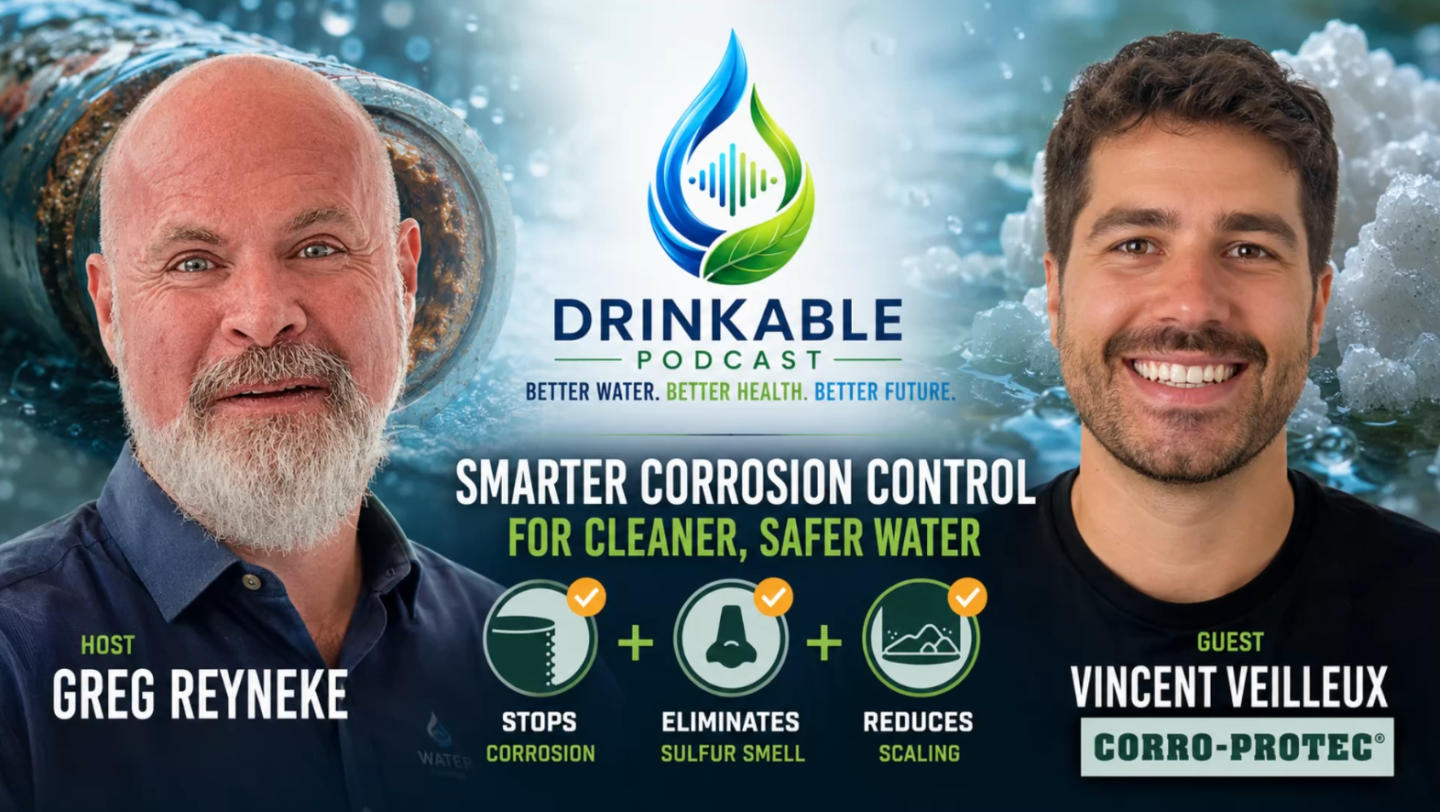
We joined Greg Reyneke, President of the Water Quality Association, on Drinkable: The Water Podcast to discuss powered anode technology, water heater protection, and the […]

Does a Powered Anode Rod Void Your Water Heater Warranty in Canada?
A compatible, properly installed powered anode rod should not void a Canadian water heater warranty. Replacing a sacrificial anode with a powered anode is standard anode maintenance, […]